


Recommended Deicers for Parking Structures
The short answer: Remove snow and ice mechanically first. Use clean abrasives when traction—not melting—is the goal. When a chemical deicer is necessary, calcium magnesium acetate (CMA) is often the best choice for parking structures. Other acetate- or formate-based products may be appropriate only after compatibility review. Avoid routine use of chloride-based products, and never use ammonium nitrate or ammonium sulfate based products.
1. Start with Mechanical Removal
Chemical use should supplement a snow-removal plan, not replace it.
- Plow early and frequently so snow does not compact and bond to the structure.
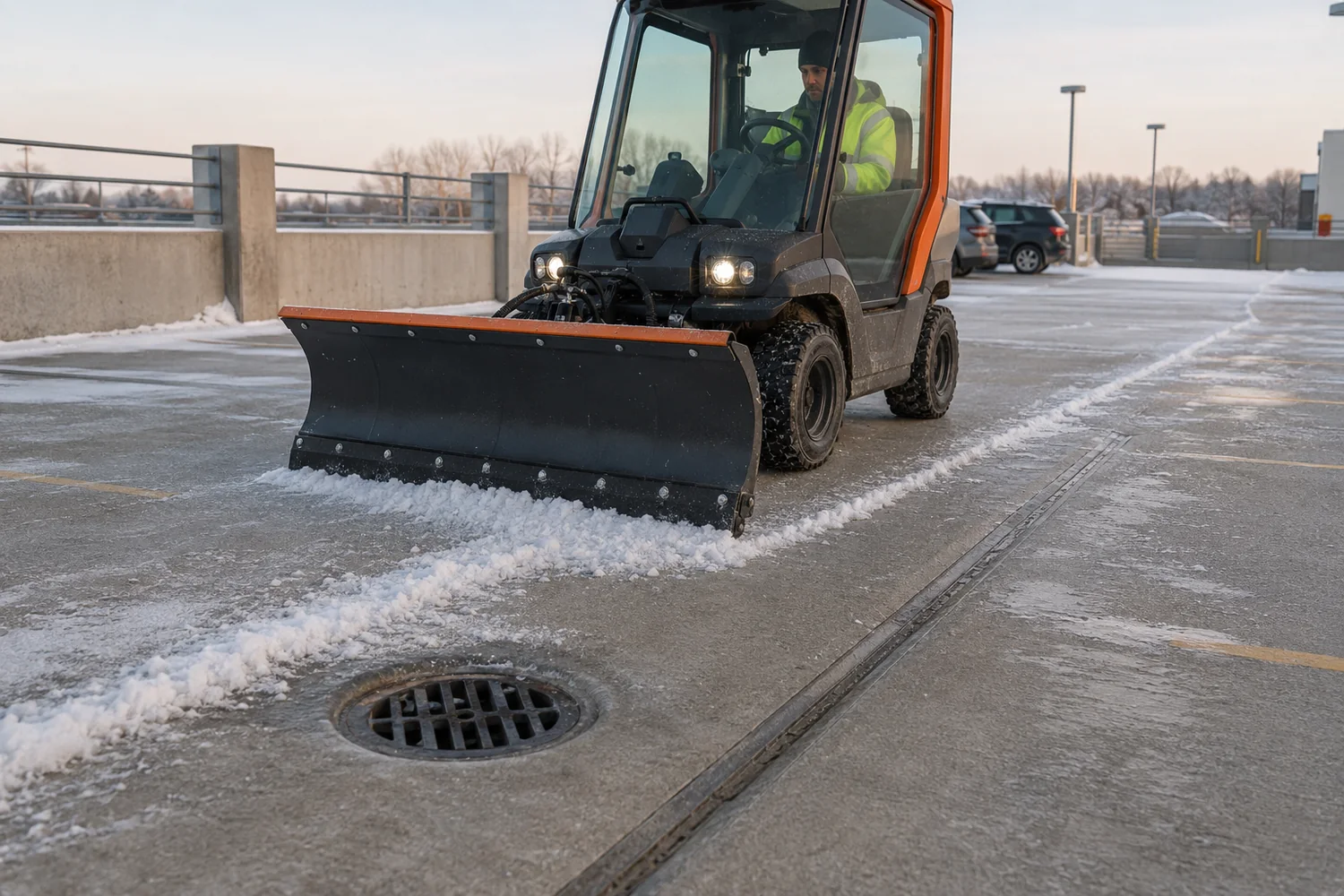
- Use rubber- or polyurethane-edged plows and shovels. Metal cutting edges can damage membranes, sealants, concrete surfaces, and joint systems.
- Verify equipment weight, axle loads, clearances, and turning requirements before bringing snow-removal equipment onto the structure.
- Establish approved snow-storage locations. Do not pile snow against barriers, over joints, or where it blocks drains. Large concentrated piles may also create loads that were not considered in the original design.
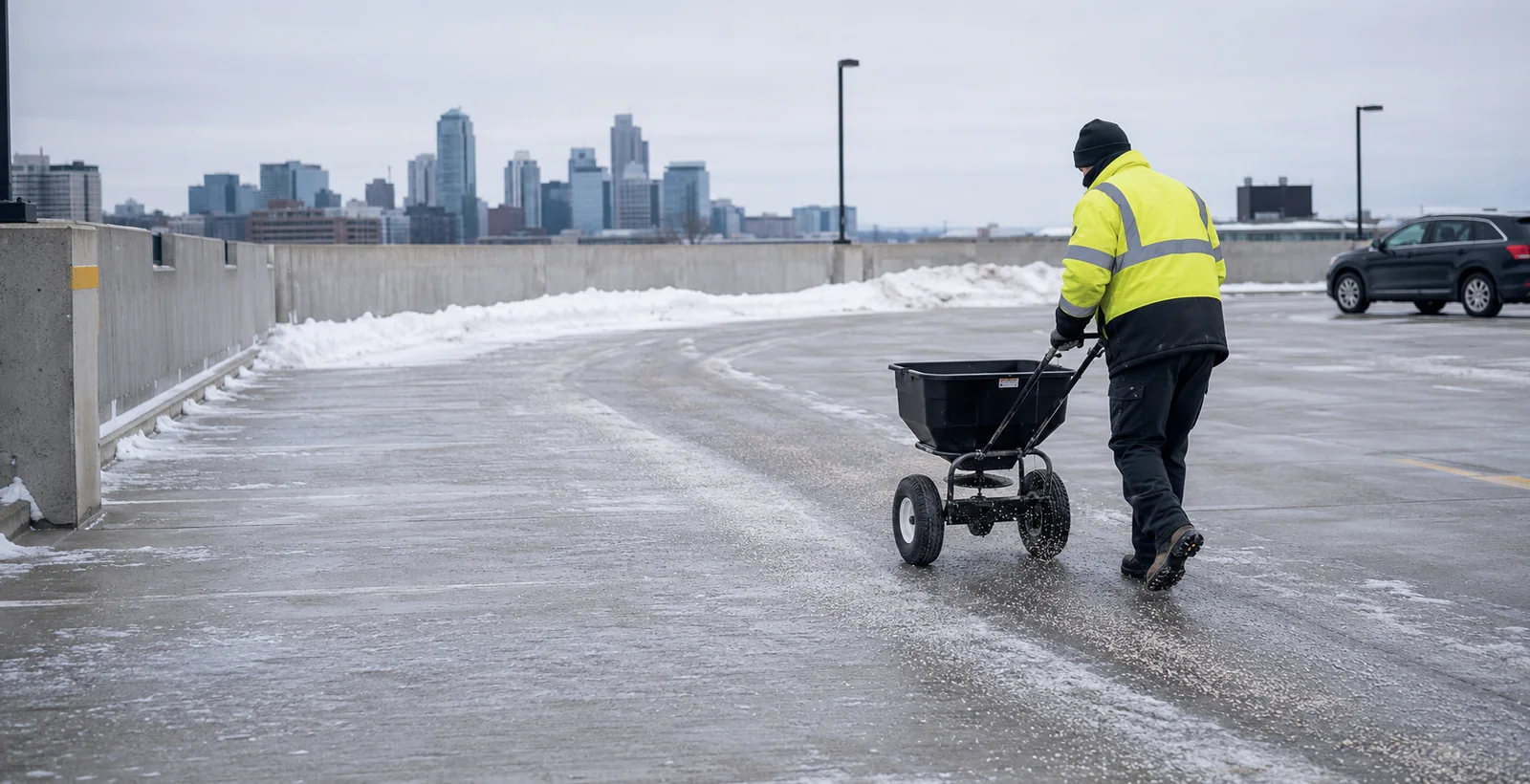
- Use clean, chloride-free sand or another approved abrasive when added traction is sufficient. Sweep it up promptly and protect drains with a temporary sediment-control method that maintains drainage capacity.
2. Select the Proper Deicer
Performance of deicers depends on the concrete temperature, product concentration, precipitation, dilution, traffic, and application rate—not simply the reported air temperature. Review the current product data sheet and safety data sheet before approving a product.
Below is our guidance and considerations for the different deicers in the market:
| Material or Method | Guidance for Parking Structures | Primary Considerations |
|---|---|---|
| Mechanical removal | Preferred first response | Lowest chemical exposure. Use nonmetallic cutting edges and structure-appropriate equipment. |
| Clean sand or approved abrasive | Preferred for traction | Does not melt ice. Sweep promptly; keep sediment out of drains and piping. Confirm that the product is not blended with chloride salt. |
| Calcium magnesium acetate (CMA) | Preferred chemical for parking structures | Chloride-free and generally less corrosive to carbon steel than chloride salts, but not “non-corrosive.” More expensive and typically less effective as temperatures fall. Verify compatibility with coatings, sealants, metals, and drainage requirements. |
| Potassium acetate, sodium acetate, or potassium formate | Conditional—obtain written approval | Chloride-free products may offer low-temperature performance, but concentrated acetate/formate products can affect certain concrete, metals, coatings, and sealants. |
| Sodium chloride (rock salt) | Restricted fallback only | Economical and familiar, but introduces chlorides that can reach reinforcing steel and accelerate corrosion. Apply only the minimum effective amount and remove residue when conditions permit and as soon as possible. |
| Calcium chloride or magnesium chloride | Avoid routine use on structural concrete | Both introduce chlorides. Concentrated solutions can also participate in damaging reactions with cement paste; magnesium-based products warrant particular caution. |
| Urea | Not a default recommendation | Generally limited melting efficiency at common winter temperatures and can create environmental nutrient-loading concerns. |
| Ammonium nitrate or ammonium sulfate | Do not use | Chemically aggressive to concrete surfaces. |
Labels such as “eco-friendly,” “pet-safe,” “natural,” or “corrosion-inhibited” do not establish compatibility with a parking structures. Some blended products still contain substantial chloride. Require the supplier to identify the active ingredients and concentration rather than relying on marketing language.
3. Have a Winter-Maintenance Plan
Before Winter
- Inspect drains, joints, sealants, membranes, concrete repairs, and known leak locations.
- Map priority treatment zones, approved snow-storage areas, drainage paths, and areas where runoff must be collected.
- Select one approved deicer and obtain its technical data, safety data, active ingredients, recommended pavement-temperature range, and application rate.
- Verify compatibility with the deck’s concrete, coatings, sealants, metals, and drainage system. Test an inconspicuous area when warranted.
- Calibrate spreaders and train staff. More product does not necessarily produce safer conditions.
- Confirm that snow-removal equipment is compatible with the structure and will not damage joints or membranes.
During Each Event
- Monitor surface temperature and forecast conditions.
- Remove snow mechanically before applying chemicals.
- Treat only the areas that need it, using the minimum effective application rate.
- Keep deicer and snow piles away from drains, joints, doors, electrical equipment, and barriers.
- Sweep excess granular material after the event and document the product, quantity, locations, temperature, and results.
After Winter
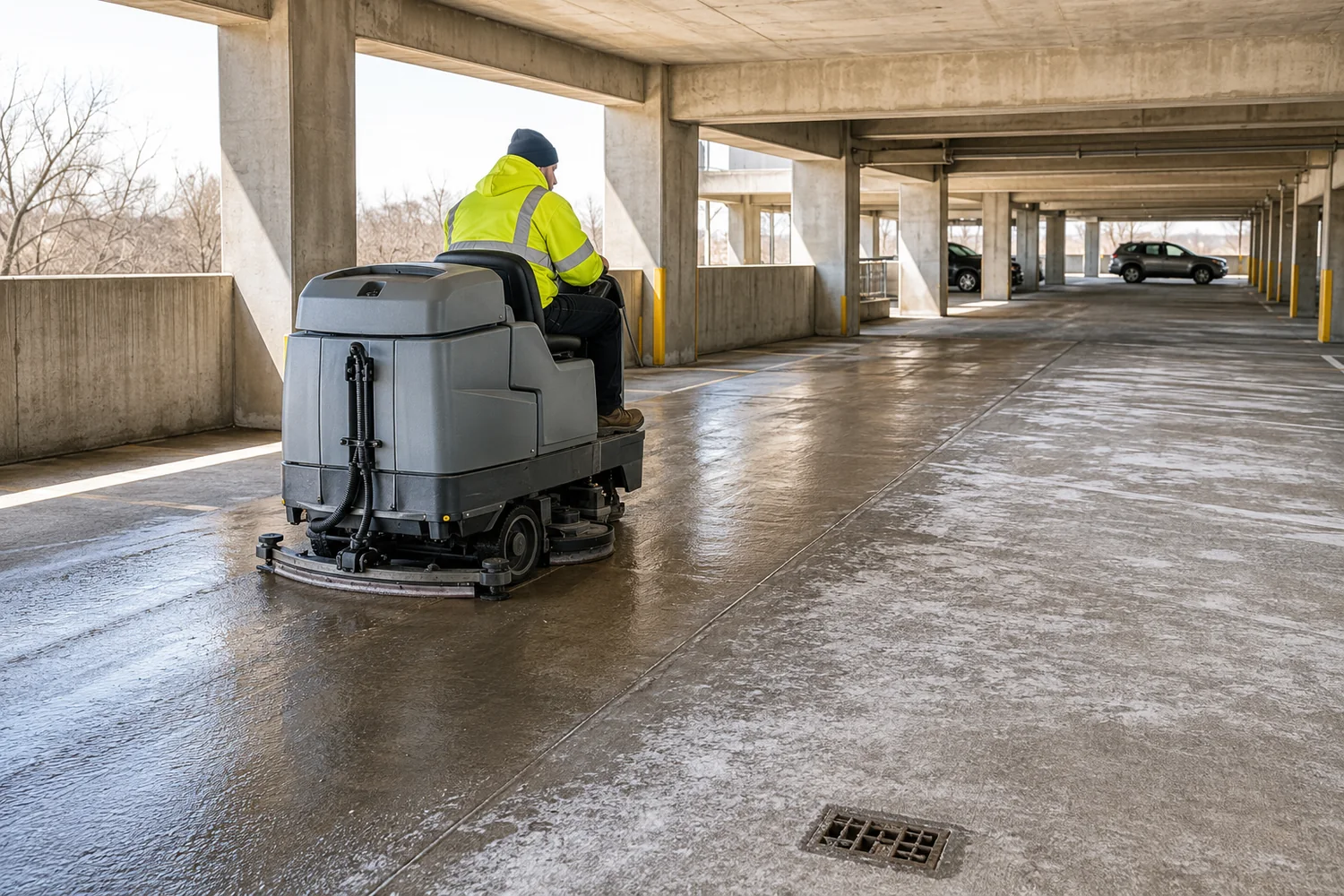
- Remove remaining abrasives and deicer residue with controlled cleaning methods.
- Follow local requirements for collecting or discharging wash water. Do not simply push contaminated water into the storm system.
- Inspect entry lanes, ramps, joints, drains, membrane terminations, and previously repaired areas for new scaling, cracks, rust staining, delamination, or leaks.
- Use the season’s application records to refine next year’s plan.
4. Involve a Parking-Consultant
Have an engineer that specializes in parking structures review the winter-maintenance plan when the structure has post-tensioning, recurring concrete spalls, active leaks, failed joints, a traffic-bearing membrane, exposed or corroded steel, uncertain equipment capacity, or a history of deicer-related deterioration.
Preserve Engineers can help owners evaluate existing conditions, identify high-risk exposure zones, review deicer compatibility, develop winter-maintenance guidelines, and plan repairs that extend the service life of the structure.
5. Frequently Asked Questions
Q1. What is the safest deicer for a concrete parking garage?
No chemical is universally safe. CMA is often the preferred chemical starting point because it is chloride-free and generally less corrosive to steel than chloride salts. The final selection should be based on the actual deck materials, pavement temperatures, drainage, environmental requirements, and the product formulation.
Q2. Can rock salt be used on a parking structure?
Life safety comes first, and there may be emergencies when sodium chloride is the available option. However, repeated use increases chloride exposure. If it must be used, apply the minimum effective amount, keep it away from vulnerable joints and drains where practical, sweep excess material, and remove residue under controlled conditions as soon as possible.
Q3. Is calcium chloride better because it works at lower temperatures?
It may melt ice at lower temperatures than sodium chloride, but it still introduces chlorides and concentrated solutions can contribute to concrete distress. Low-temperature performance is only one part of the selection decision.
Q5. Does “corrosion-inhibited” mean a deicer is safe for a garage?
No. An inhibitor may reduce corrosion under a particular laboratory test, but it does not remove chloride or prove compatibility with every metal, concrete mixture, coating, sealant, or drainage condition in the garage.
Need help preparing a winter-maintenance or repair plan for your parking structure? Contact Preserve Engineers.
