

New York City Parking Garage Inspection Requirements: What Owners Need to Know
Parking garages are exposed to water, road salt, vehicle impacts, temperature changes, and constant traffic. Cracks, failed joints, and drainage problems can allow moisture and chlorides to reach reinforcing steel, structural connections, and other vulnerable components. Damage may develop gradually, but loose concrete, weakened framing, or unstable guards can quickly become a public-safety concern.
New York City addresses this risk through the Periodic Inspection of Parking Structures program, commonly called PIPS. The program requires owners to retain a qualified engineer, document the garage’s condition, file with the Department of Buildings, and correct significant deficiencies.
What owners should know: Most covered New York City parking structures must receive a condition assessment by a Qualified Parking Structure Inspector and file a compliance report with DOB at least once every six years. A QPSI-led observation is also required every year after the current cycle report is accepted.
Which Parking Structures Are Covered?
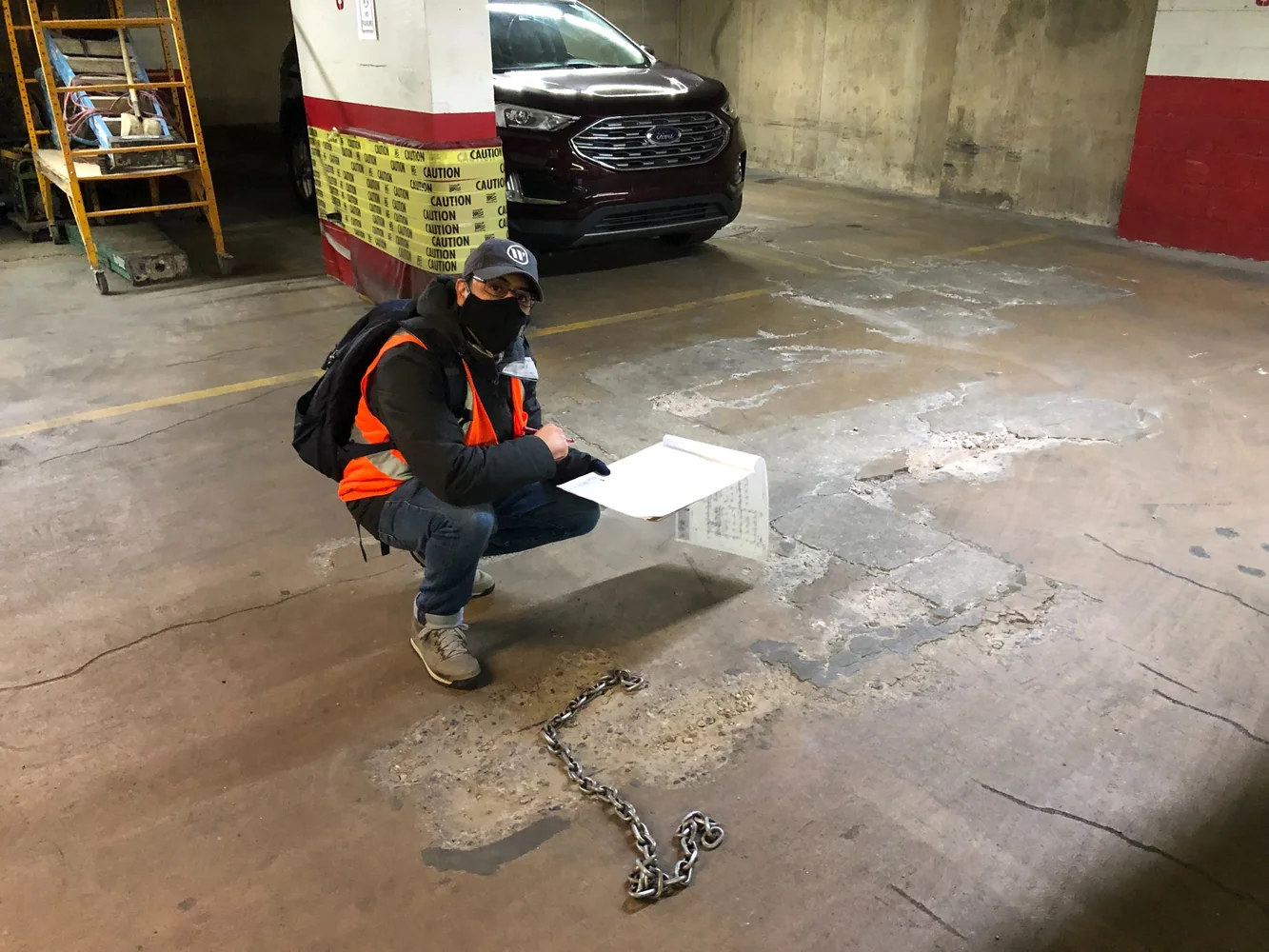
The requirement applies broadly to buildings—or portions of buildings—used to park or store motor vehicles. This includes open and enclosed parking garages, stand-alone garages, and parking located within, above, or below another building.
The rule does not include unenclosed and unattached surface lots, garages serving one- and two-family homes, facilities holding fewer than three cars, or automotive repair shops, showrooms, and service stations.
Owners remain responsible for determining whether a property is subject to the program. If the City’s records appear incorrect or the use of the property is unclear, an owner or QPSI can submit a verification request to DOB.
Who Can Perform the Inspection?
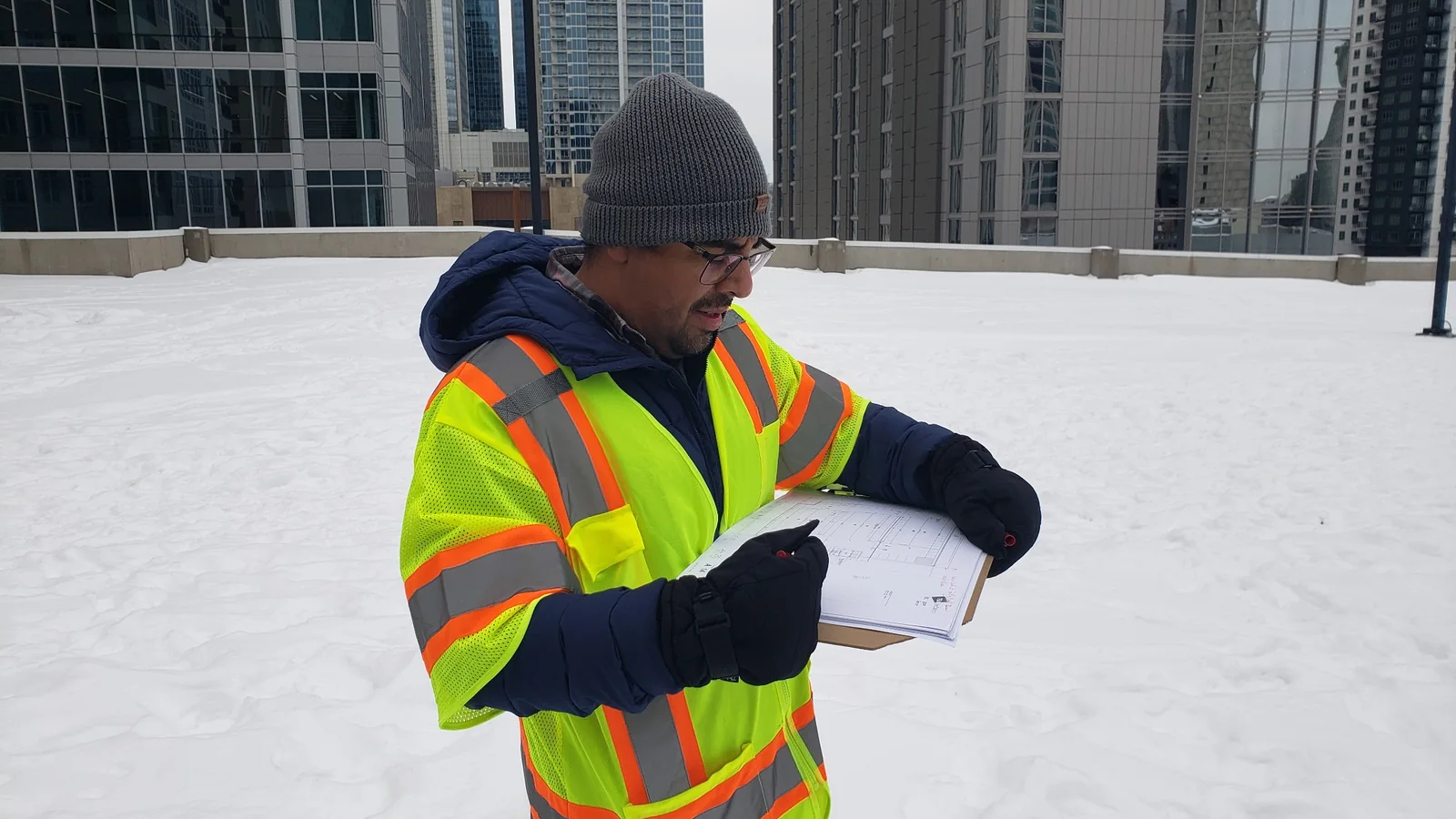
The condition assessment must be performed by or under the direct supervision of a New York State-licensed professional engineer who is designated by DOB as a Qualified Parking Structure Inspector, or QPSI.
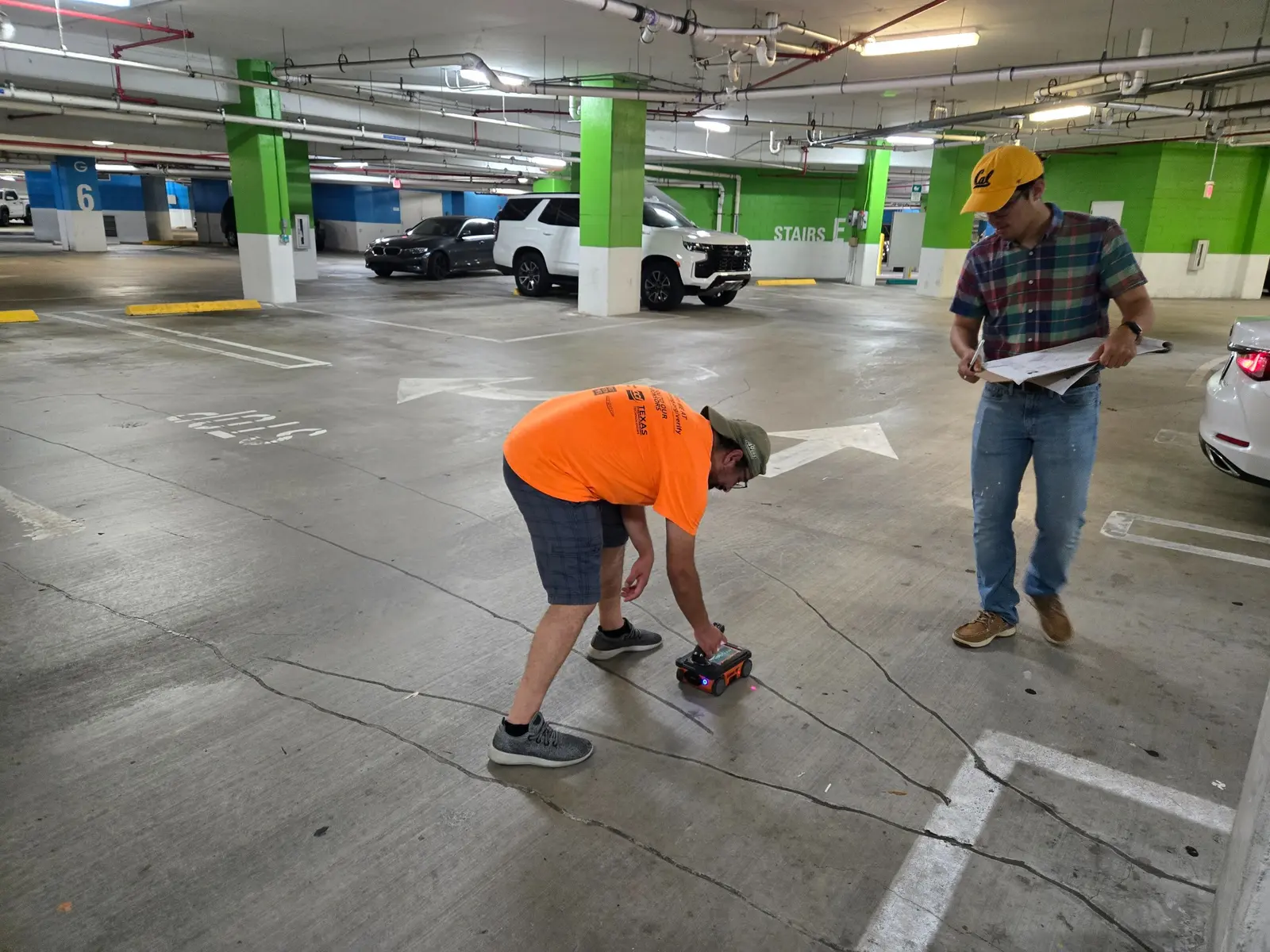
This is more than a visual walk-through. The QPSI develops an assessment program for the specific garage based on its construction, age, exposure, maintenance history, and previous repairs. The current rule requires a complete physical examination, including hands-on methods such as sounding, probing, scanning, cores, load testing, or other testing selected by the QPSI. Physical examinations must cover at least 10 percent of each structural-element type, including slabs, beams, and columns.
The assessment also considers waterproofing, wearing surfaces, fireproofing and fire-stopping, joints, guards, railings, and other garage components that can affect safety or durability.
What Must Be Filed With DOB?
The QPSI files the compliance report through DOB NOW: Safety within 60 days after the final inspection. The report documents the garage, inspection methods, physical examinations, mapped deficiencies, photographs, prior maintenance, required repairs, and the structure’s overall classification.
The report must classify the parking structure as one of the following:
- Safe: No unsafe conditions and no conditions requiring repair or engineering monitoring.
- SREM: Safe with repairs and/or engineering monitoring. The structure is currently stable, but identified conditions must be repaired or monitored within the QPSI’s stated timeframe.
- Unsafe: At least one condition is hazardous to people or property and requires immediate protective action and repair.
The goal is not simply to obtain a filing status. The report should give the owner a clear understanding of what needs attention, how urgently it should be addressed, and what additional investigation or repair work is required.
What Happens When Repairs Are Required?
An unsafe condition must be reported immediately. The owner must protect the public and begin appropriate repairs or reinforcement. Unsafe conditions generally must be corrected within 90 days after the compliance report is submitted, unless DOB grants an extension based on the scope of work and supporting documentation.
After unsafe repairs are completed, the QPSI reinspects the work and an amended report is filed to update the garage’s status. Protective measures generally remain in place until DOB accepts the amended report or authorizes their removal.
SREM conditions should not be treated as optional maintenance. They must be repaired or monitored within the timeframe established in the accepted report. A follow-up condition assessment and amended report are generally required between 18 months and two years after the initial SREM filing. A condition cannot remain classified as SREM at the same location for two consecutive filing cycles; an uncorrected condition may be classified as unsafe in the next cycle.
Starting repair planning while the report is being completed can save valuable time. Drawings, permits, contractor pricing, access planning, and phased construction may take months—especially when the garage must remain open.
Annual Observations Are Required Between Filing Cycles
The six-year report is not the only owner obligation. After the current cycle report has been accepted, the owner must arrange an annual observation based on the garage-specific checklist prepared by the QPSI.
Under the current rule, the annual checklist must be completed by or under the direct supervision of a QPSI. Completed checklists are kept at the property, made available to DOB and the QPSI upon request, and included with the next cycle’s filing. A potentially hazardous condition discovered during an annual observation must be reported immediately.
Annual observations help owners identify changes before they develop into larger repairs or an emergency closure. They also create a useful record showing whether leakage, cracking, corrosion, or previous repairs are stable or progressing.
Current NYC Filing Schedule
NYC’s first six-year cycle is divided into three two-year filing windows based on location:
- Sub-Cycle 1A: Manhattan Community Districts 1–7 — filing window ended December 31, 2023
- Sub-Cycle 1B: Manhattan Community Districts 8–12 and all Brooklyn Community Districts — filing window ended December 31, 2025
- Sub-Cycle 1C: All Bronx, Queens, and Staten Island Community Districts — January 1, 2026 through December 31, 2027
Owners in the Bronx, Queens, and Staten Island are now in the active filing window. Owners with an overdue Manhattan or Brooklyn report should act promptly. Civil penalties can include $1,000 per month for late filing and an additional $5,000 per year for failure to file. Failure to correct an unsafe condition can also result in monthly penalties.
Do Not Wait Until the End of the Filing Window
A complete PIPS assessment can require record review, access coordination, hands-on inspection, testing, laboratory work, report preparation, repair planning, and follow-up inspections. Waiting until the deadline leaves little time to address unexpected conditions or a rejected filing.
Owners should begin by:
- Confirming the property’s community district and filing window
- Verifying that the garage has a Parking Structure ID in DOB NOW
- Gathering prior reports, annual checklists, drawings, repair records, permits, and violations
- Retaining a QPSI early enough to plan access and physical examinations
- Identifying active leaks, loose concrete, damaged guards, vehicle impacts, and restricted areas
- Allowing time for protection, repair design, permitting, bidding, and construction
How Preserve Engineers Can Help
Preserve Engineers specializes in parking-structure assessment and restoration. Our team can help owners evaluate deterioration, organize testing, define repair priorities, develop repair drawings and specifications, prepare construction budgets, assist with contractor bidding, and provide construction administration through completion.
Connecting the required inspection to a practical repair program gives the owner a clearer path forward. Instead of receiving a report and starting over with another team, the findings can be translated directly into prioritized work that considers cost, access, phasing, and continued garage operation.
Is Your New York City Parking Garage Due for Inspection?
If your parking structure is in the active filing window—or has an overdue report—early coordination can reduce compliance risk and create more time to plan repairs. Contact Preserve Engineers to discuss the inspection, testing, and restoration needs for your facility.

Parking Structure Inspection Requirements Explained – PREserve Engineers, PLLC
[…] New York City: Parking structures must be inspected by a New York State professional engineer who is also a Qualified Parking Structure Inspector, or QPSI. Reports are currently filed on a six-year cycle. After the current cycle ends on January 1, 2028, inspections will generally be required every four years. To learn more click here […]