

Minneapolis Parking Ramp Inspection Requirements: What Owners Need to Know
Minneapolis winters are hard on parking structures. Snow and ice bring moisture into the ramp, while deicing salts are carried across the driving surface and into cracks, joints, and other vulnerable areas. Over time, these conditions can contribute to corrosion, concrete spalling, failed sealants, damaged connections, and deterioration that may not be obvious during routine maintenance.
For this reason, the City of Minneapolis requires qualifying parking ramps to be inspected regularly by a professional engineer and to maintain a current operating certificate.
What owners should know: A Minneapolis parking ramp must obtain its first operating certificate within five years after its Certificate of Occupancy date. After that, the ramp must be inspected by a qualified civil or structural engineer and the operating certificate must be renewed every year.

Which Parking Structures Are Covered?
The City defines a parking ramp as a building or structure with more than one level used for parking, storing, maintaining, or working on motor vehicles. A facility with parking at grade and at least one supported level above or below grade is considered a multilevel parking ramp.
In practical terms, the requirement applies broadly to structured parking in Minneapolis, including parking associated with offices, apartments, hotels, hospitals, retail properties, and mixed-use developments. A surface parking lot without a supported level is not a parking ramp under this definition.
When Is the First Certificate Required?
The first operating certificate is required within five years after the parking ramp’s Certificate of Occupancy date. Once issued, the certificate must be renewed annually.
Owners should submit the renewal application at least 30 days before the certificate expires. The application must include the engineer’s inspection report, along with the information and insurance documentation required by the City. Once approved, the operating certificate must be posted in a visible location, such as the ramp office or main collection booth.
What Does the Annual Inspection Require?
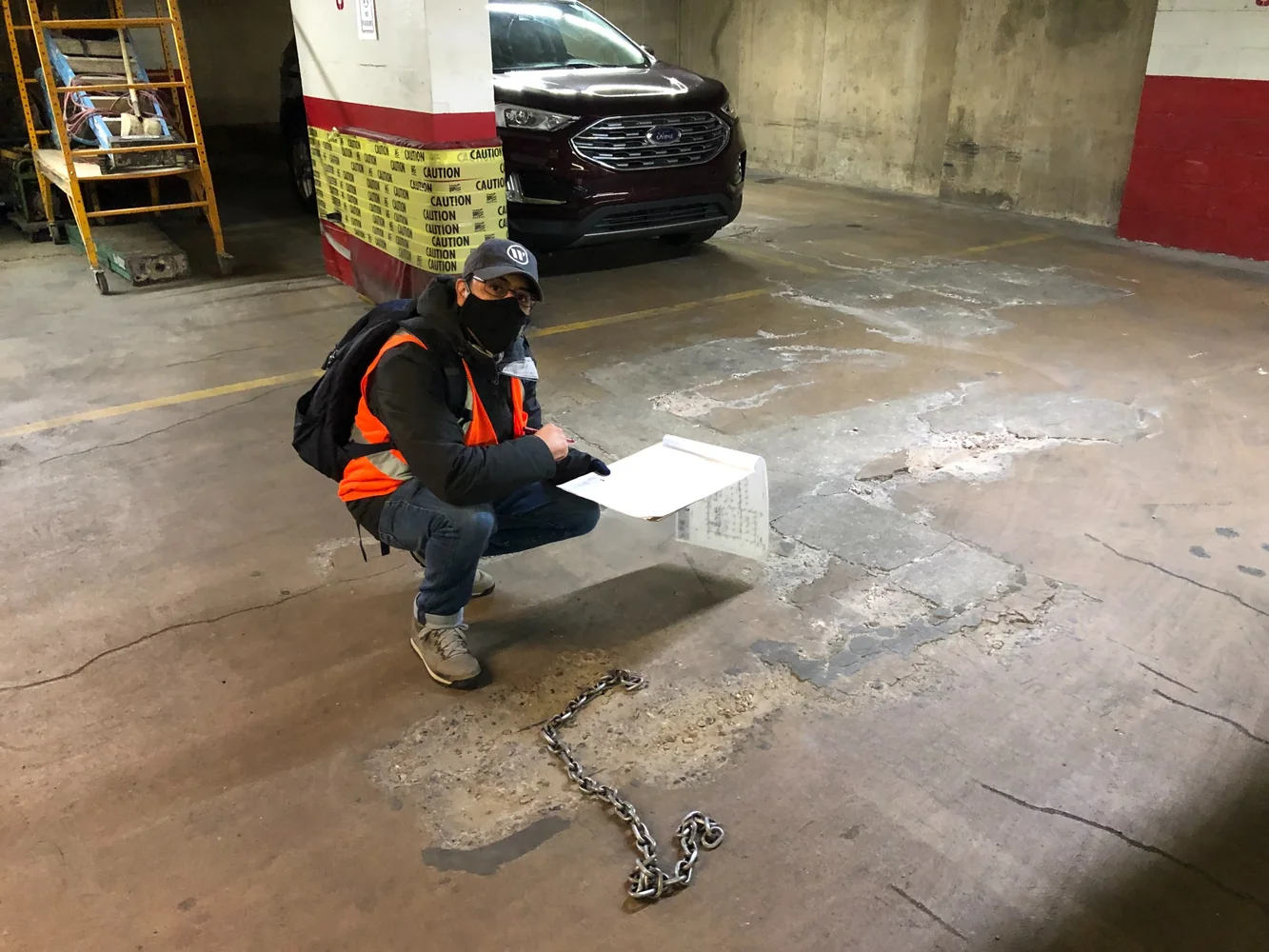
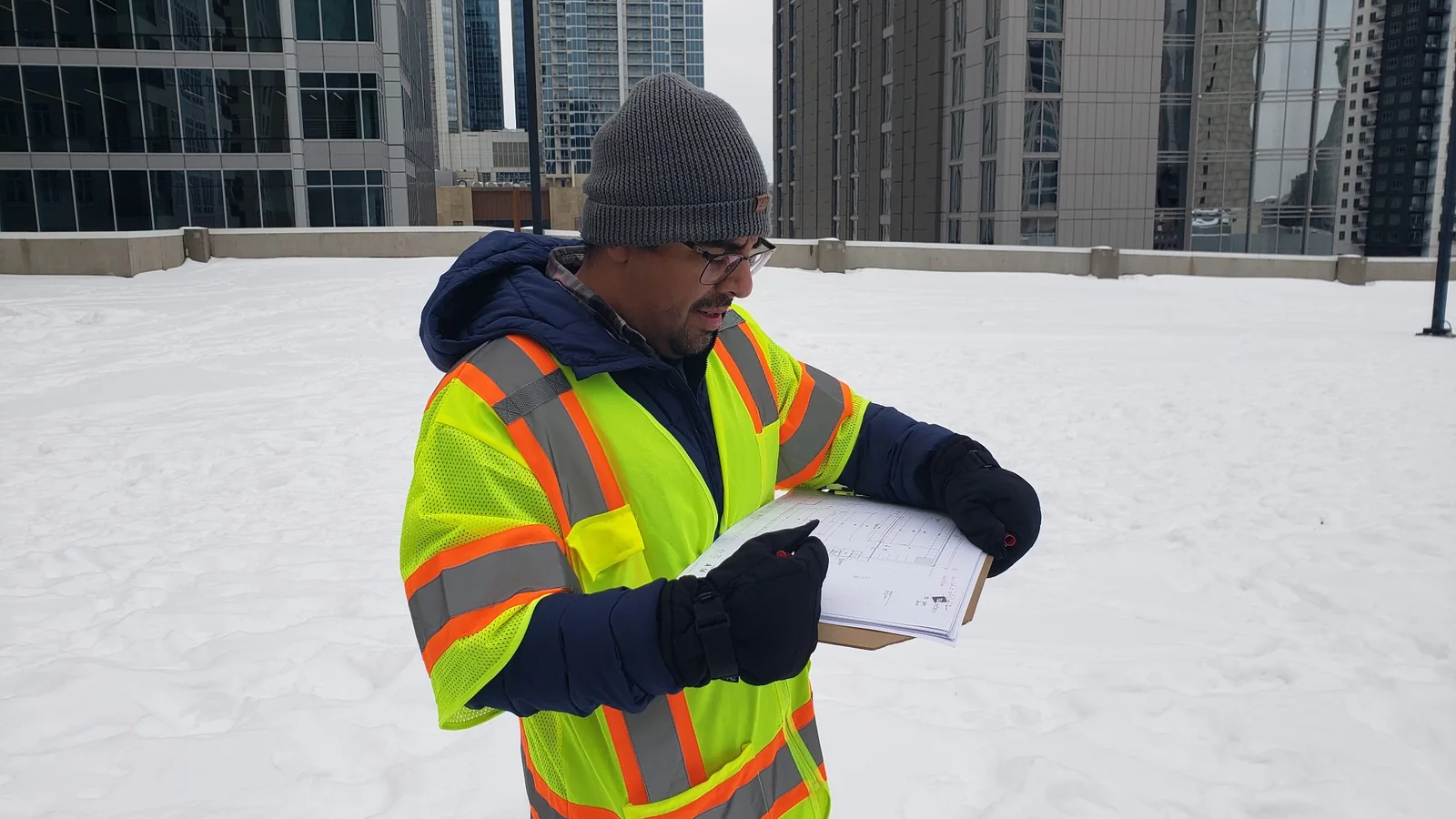
The annual inspection must be completed by a professional engineer registered in Minnesota whose field of practice is civil or structural engineering. The engineer performs an on-site field inspection and prepares a report documenting the findings, recommendations, and whether the structure is capable of supporting the loads for which it is used.
The inspection typically includes observations of:
- Concrete slabs, beams, columns, walls, and connections
- Cracking, spalling, delamination, and exposed reinforcing steel
- Post-tensioning systems and signs of tendon deterioration
- Precast concrete joints, bearing areas, and shear connections
- Structural steel framing and corrosion
- Expansion joints, sealants, traffic coatings, and waterproofing
- Drainage conditions and areas of repeated water leakage
- Stairs, guardrails, vehicular barriers, and other safety-related components
- Previous repairs and whether deterioration has continued around them
The goal is not only to identify visible damage. It is to determine whether the ramp remains structurally serviceable and to identify conditions that need immediate attention, further investigation, maintenance, or repair.
Additional Testing Is Required Every Third Year
Minneapolis requires an on-site field inspection every year. Every third year, the ordinance also calls for enough destructive or equivalent testing and nondestructive testing to properly evaluate the ramp’s structural condition.
Depending on the construction type and observed conditions, testing may include chain dragging, concrete cores, chloride testing, sounding, corrosion evaluation, or other appropriate methods selected by the engineer. This added investigation can help identify deterioration below the surface and define whether repairs or more focused testing are needed.
Owners should confirm with their engineer whether the upcoming renewal is a third-year testing cycle. Testing may require additional access, traffic control, laboratory coordination, and restoration of test locations, so it should be planned before the inspection deadline.
What Happens When Repairs Are Needed?
An inspection report may identify routine maintenance, near-term repairs, or conditions requiring immediate action. Urgent hazards should be addressed promptly through temporary protection, restricted access, shoring, or emergency repairs as appropriate.
For broader deterioration, the next step is usually a defined repair program. The engineer can develop repair drawings and specifications, establish priorities, prepare a construction budget, assist with contractor bidding, and provide construction administration while repairs are completed.
This continuity matters. A report that only lists deficiencies leaves the owner to determine scope, cost, sequencing, and contractor requirements. Connecting the inspection directly to a practical repair plan reduces uncertainty and helps the owner maintain safe operation while work is performed.
Do Not Wait Until the Renewal Deadline
Although the renewal application is due at least 30 days before expiration, owners should begin earlier. Access planning, record review, field testing, laboratory results, report preparation, and corrective work can take time.
A practical starting checklist includes:
- Confirm the Certificate of Occupancy date and current certificate expiration date
- Review the previous inspection reports and testing cycle
- Gather original drawings, repair documents, and maintenance records
- Schedule the engineer early enough to coordinate access and testing
- Identify active leaks, loose concrete, impact damage, or other current concerns
- Allow time to address urgent conditions before filing the renewal
Operating without a valid certificate can lead to increased fees, administrative penalties, certificate revocation or nonrenewal, and interruption of parking operations. More importantly, delayed inspections can allow manageable deterioration to become a larger and more expensive repair program.
How Preserve Engineers Can Help
Preserve Engineers specializes in parking-structure assessment and restoration. Our team can assist Minneapolis owners with annual inspections, third-year testing programs, operating-certificate documentation, repair prioritization, construction budgets, repair design, contractor bidding, and construction administration.
Because we remain involved from inspection through repair completion, owners receive a clear path from identified conditions to practical corrective work—without having to restart the process with a separate team.
Is Your Minneapolis Parking Ramp Due for Inspection?
If your parking ramp is approaching its annual renewal or third-year testing cycle, early planning can make the process more predictable. Contact Preserve Engineers to discuss the inspection, reporting, and repair needs for your facility.
